
The dummies guide to supplements
Skeptical Fitness: Supplement Guide
This guide will be updated over time to include secondary and tertiary supplements
We’re back with another guide to yet another thing the fitness industry loves to over-complicate: fitness supplements. Find out what are they, if they work and which ones are best suited for your goals.
Ergogenic aids vs supplements
Before diving in too deeply, we need to first understand what a supplement or ergogenic aid is, and what’s the difference between them.
A supplement is something that is there to fill a deficit of a nutrient that you are struggling to get enough of (e.g vitamins, minerals, proteins, amino acids).
An ergogenic aid (ergo= work, genic = producing) is something used to improve physical and/or mental performance. An ergogenic aid can be a substance, device, practice, or treatment but today we’re only looking at substances.
There is an important distinction between an ergogenic aid and a supplement, while an ergogenic aid can be a supplement, not all supplements are ergogenic. Caffeine, for example, isn’t something we naturally produce and has a measurable impact on sporting performance, making it an ergogenic aid, not a supplement, while protein powder is just a supplement and not an ergogenic aid.
Not a magic bullet
Will a supplement help me gain muscle/lose weight or improve my health and fitness? Probably not. While the supplement industry likes to make people think that supplements are the be-all, end-all, something that will supercharge your health, fitness and anything else in between, the reality is that while some supplements work, they tend to only have a small (but consistent) effect. This doesn’t mean that some supplements don’t work, but they aren’t going to make you gain 10kg of muscle in a month, or drop 10kg of fat with little effort as they aren’t so powerful that they remove the most important part of improving your health and fitness; consistency and (often hard) work.
Primary supplements
Primary supplements are supplements with solid research backing them in human trials - if you’re going to use any supplements, these are the most effective and least likely to cause side effects
Caffeine
Who should use it? People trying to improve their anaerobic or aerobic performance as well as power output
Who shouldn’t use it? People who are caffeine intolerant, pregnant woman, children
Class: Performance enhancer, fat-burner, nootropic
Level of evidence: Very high
Dosage: 100-400mg
Effects:
Improved anaerobic performance
Improved aerobic performance
Fat burning effect
Appetite-suppressant
How it works
Found in coffee beans or synthetically created, caffeine is one of the most well-researched supplements, with a significant amount of studies supporting its usage in sports. It is one of the most commonly used and effective performance enhancers, used predominantly in endurance sports and weight lifting. It has a well-researched effect to increased power output, anaerobic exercise performance and a small, but noticeable increase in endurance performance. Dosages vary by sporting goal, with researchers recommending 4-6 mg/kg bodyweight for most populations however those who are new to caffeine supplementation are recommended to start off at around ~100mg of caffeine.
While an effective stimulant, continual use of caffeine causes tolerance to build up, reducing the effects to the point where you only experience caffeine’s anti-sleeping effect. This is what’s known as an insurmountable tolerance which cannot be overcome with greater dosages. This can be avoided by cycling caffeine (taking a couple weeks off or lowering intake) every few months.
Practical takeaway
Caffeine is well suited for people doing resistance training, or looking to improve their aerobic performance during endurance exercise. Taking between 200-400mg of caffeine is likely the ideal dosage for most people, however even dosages as low as 50mg have been correlated with performance increases.
Creatine
Who should use it? People doing resistance training or playing sports with short explosive bursts of power (e.g soccer, tennis)
Who shouldn’t use it? Creatine non-responders
Class: Supplement
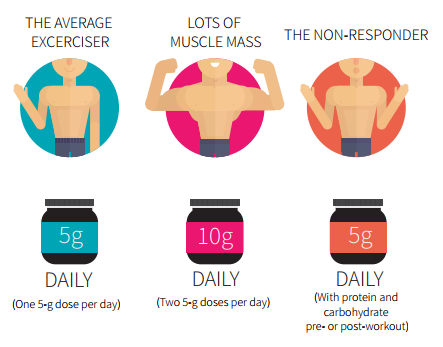
Dosage: 2.5-5mg/day for most people. 10mg/day for very muscular individuals.
Level of evidence: Very high
Effects:
Improved power output
Improved strength performance
Improved anaerobic and aerobic performance (exercise up to 150s)
Increased water weight
Nootropic effect (light evidence supporting this)
How it works
Creatine is a compound that is essential to energy production, notably during short, intense burst of activity. Our body uses three energy systems, and creatine affects our first energy system, our ATP-Pcr system (Adenosine Triphosphate - Phosphocreatine system). We need ATP to do any immediate activity and Pcr acts as a temporary backup energy source when our ATP store starts running low. Supplementing creatine means that our muscle stores of Pcr are fully stocked, letting us have a bit more fuel in the tank for energy.
Creatine supplementation has been remarkably well researched for a supplement, being notably effective for improving strength and power output during resistance exercise. A recent meta-analysis found an increase in strength of 8% and a 13% increase in power output, over time this increase in strength and power has been associated with greater muscle mass (able to lift heavier weights = able to gain muscle quicker).
Practical takeaway
Creatine works and can be an effective way to increase you to increase your anaerobic performance, however, the effect size is mild, meaning you are likely to get only a few extra reps out, but over time its usage has been correlated with increase muscle mass. For most people, 5g/day is more than sufficient however if not taken consistently its effects with fade.
You don’t need to load creatine, taking 5/mg daily will take ~2 weeks for muscle creatine stores to be fully saturated, and reduces the potential gastrointestinal distress associated with higher dosages. If you do want to load take ~25g/day for 5 days to fully saturate your muscle creatine stores.
Source: Examine.com
Protein
Who should use it? Anyone trying to optimise their protein intake.
Who shouldn’t take it? People getting enough protein through their diet or those with liver disease.
Class: Supplement
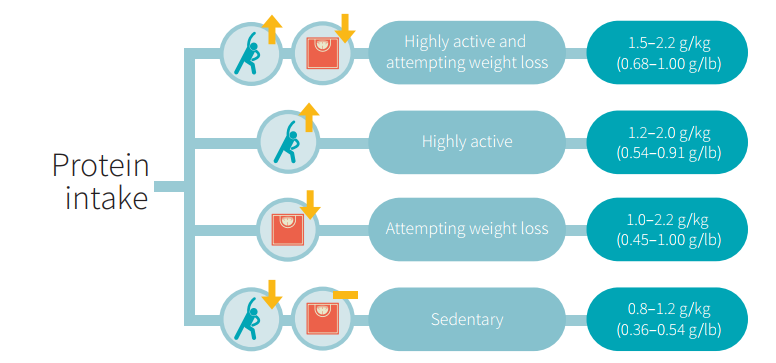
Dosage: 0.8g/kg a day for sedentary people. 1.0-2.5g/kg for active individuals or athletes.
Level of evidence: Very high
Effects:
Increased protein synthesis (correlated)
Decreased fat free mass
Appetite suppressant
Preserves muscle mass during low calorie diets
How it works
Protein is an essential building block for muscle and alongside being important to recovery, it is vital to many physiological functions. Protein powder is the best example of a supplement, with its sole purpose being to increase your dietary intake of protein. Supplementation of protein powder isn’t necessary if you are getting sufficient protein through dietary protein (meats, veggies etc). If you are neither vegan nor lactose intolerance, a whey or casein protein supplement
Protein powder can be very handy for someone struggling to get enough protein in their diet, and a supplement can quickly and easily increase your daily protein intake. Timing of protein intake varies by individual, but aiming to get ~30g of protein within 4 hours of your workout is ideal to maximize protein synthesis.
Adequate protein intake is very important to help buffer muscle breakdown during prolonged hypocaloric (low calorie) diets, especially when combined with resistance training.
Practical takeaway
Supplementing protein can be a great way to increase your intake if you are someone who struggles to get enough protein in a day. While most people are able to get enough protein in their daily diet to improve their fitness level, if you struggle to hit your protein targets, a supplement can help.
Source: Examine.com
Nitrates
Who should use it? People weight training or doing aerobic exercise. Hypertensive individuals and apparently healthy individuals (Check with your GP prior to any supplementation)
Who shouldn’t take it? Hypotensive individuals
Class: Supplement
Dosage: 6.4-12.8mg/kg/day
Level of evidence: High
Effects:
Increased exercise time to exhaustion
Buffers the increased blood pressure caused by exercise
Decreased oxygenation cost of exercise
Improved aerobic exercise performance
Improved anaerobic running capacity
How it works
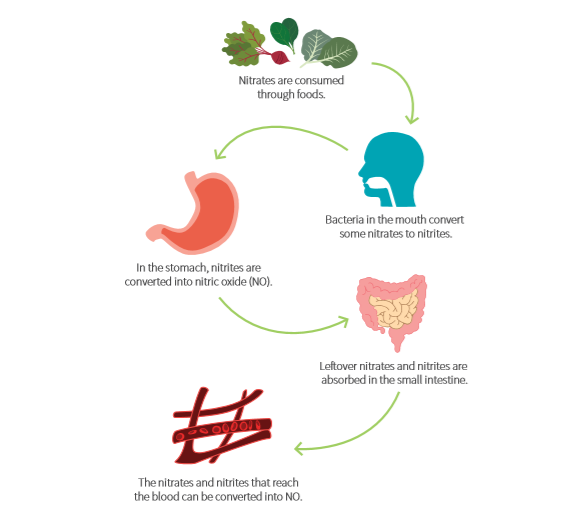
Inorganic nitrate (NO3) plays a critical role in regulating blood pressure and cardiovascular health, with dietary supplementation working by being converted to nitric oxide (a key molecule for blood flow regulation). It is found in leafy greens, being the main ingredient in beetroot. Nitrate appears to have potent regulatory effects on blood flow with research showing it appears to reduce blood pressure in hypertensive individuals, however it also helps reduce blood pressure in acute stress situations (i.e apparently health person during exercise).
Practical takeaway
Nitrate supplementation appears to be beneficial for cardiovascular health, as well as enhancing exercise performance through increasing time to exhaustion
Source: Examine.com
Secondary supplements
Secondary supplements have promising research behind them but may not work
L-citrulline
Who should use it? People weight training, playing sports with short explosive bursts of power (e.g soccer, tennis)
Class: Supplement
Dosage: 3-8g/day
Level of evidence: Medium
Effects:
Reduced fatigue during aerobic & anaerobic exercise
Increased Nitric Oxide levels
Supplement background
L-Citrulline is one of the three amino acids in the urea cycle (alongside L-Arginine and L-Ornithine), which converts into L-Arginine after absorptions (making it a superior supplement to just taking Arginine). A small amount of research suggests that taking citrulline will lead to higher and more consistent arginine levels than taking arginine. Citrulline is very readily converted to arginine as needed, and it is also better absorbed than arginine, which not only makes it a better source of arginine for the body but can mean a lower rate of gastrointestinal upset than arginine when taken in high doses.
While there have only been few studies examining L-Citrulline as a supplement, those that have been done found a notable increase in Nitric Oxide after consumption. Supplementation appears to help reduce fatigue and improved endurance during both aerobic and anaerobic exercise however there isn't enough evidence to support the claim that L-citrulline supplementation improves power output during exercise. More research for erectile dysfunction and blood pressure is needed, but a small amount of research is supportive of a beneficial effect.
Practical takeaway
L-citrulline may have an effect at reducing fatigue and improving endurance during aerobic and anaerobic exercise but it is still in need of significant research. A better and more well researched option is Nitrates.
Fat loss
So far there is only one supplement with enough evidence to warrant being classified as a primary supplement: protein.
Protein can aid fat loss in several ways
Decreased hunger - Protein is more filling than carbs or fat
Digesting protein burns more calories than carbs or fat (known as Thermic Effect of Food)
Your body doesnt like to convert protein to fat - it’s inefficient and excess dietary protein is more likely to be burnt for energy or converted to glucose
Muscle gain
While there are no supplements that have a direct effect on muscle gain
Creatine - For improved performance during short bursts of high intensity exercise
Protein - For adequate protein intake
Take-home points
Some supplements work and may improve your performance in the gym but they shouldn’t be seen as essential to train
Supplements that actually work have few things in common - They provide a small benefit and have a large body of research backing them up
If a supplement’s claims seem too good to be true - they probably are