
COVID-19 Medical Misinformation
If you can’t be part of the solution, at least don’t be part of the problem
It can be easy to hit the news fatigue where you’re sick of hearing about COVID-19, and I’ll admit I’m adding to that fatigue with yet another article about it. The reality is it is a stressful, tiring time but it is more important than ever to know the facts about the virus. Medical misinformation is running rampant both in social and mainstream media with armchair experts coming out of the woodwork. We need to stay ahead of the misinformation spreading before more people get hurt by it and the only way to do that is to leave it to the experts, the epidemiologists, the virologists and the doctors.
A quick disclaimer: SARS-CoV-2 refers to the virus itself, while COVID-19 is the disease caused by the virus
We are actually seeing in real time the consequences of science-denial, of rejecting the advice of experts and basing opinions on your “hunches”, and of approaching reality with a general attitude of anti-expertise populism. - Dr. Steven Novella
An evolving crisis
Note: The following statistics are from UpToDate and are current as of 21/03/2020. This is a developing situation, the evidence is evolving and some of these numbers will change over time.
Mortality rate
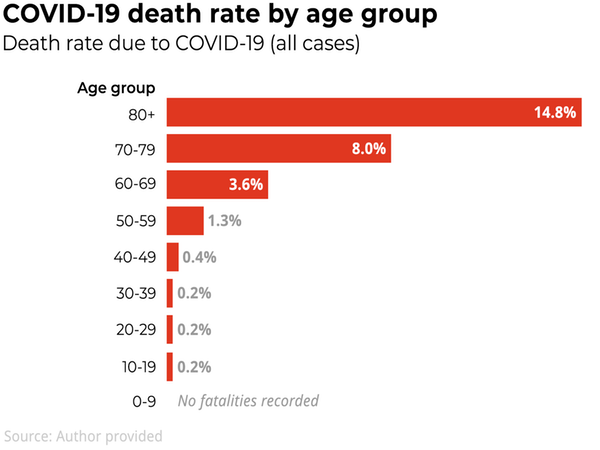
The evidence so far is saying that the mortality rate for COVID-19 varies widely between regions, with cases in Wuhan, the Chinese province where the virus originated, having a mortality rate of 5.8% while cases in the rest of China have a 0.7% mortality rate. Older age is associated with increased mortality, with an 8% mortality rate in those aged 70-79 and 15% for those ages 80 or older. The majority of deaths have occured in patients with advanced age or those with other comorbidities (diseases that occur alongside another disease) such as diabetes, chronic lung disease, hypertension, cancer and cardiovascular disease.
Severity
The symptoms of COVID-19 can range from mild to critical in severity with the good news being that most of the cases so far do not result in severe infection.
Mild - 81% of cases
Severe disease - 14% of cases
Critical disease - 5% of cases
Overall fatality rate was 2.3% with no deaths reported in non-critical cases
Estimates for case fatality rates are widely varying, ranging from .5%- 6.0%, however over time with greater testing, the estimates will become more reliable. An important note is that the mortality rates are context dependent, which seems to be influenced by the healthcare system (if the healthcare system is overwhelmed, mortality rate spikes) and the population demographic (an aging population is at higher risk).
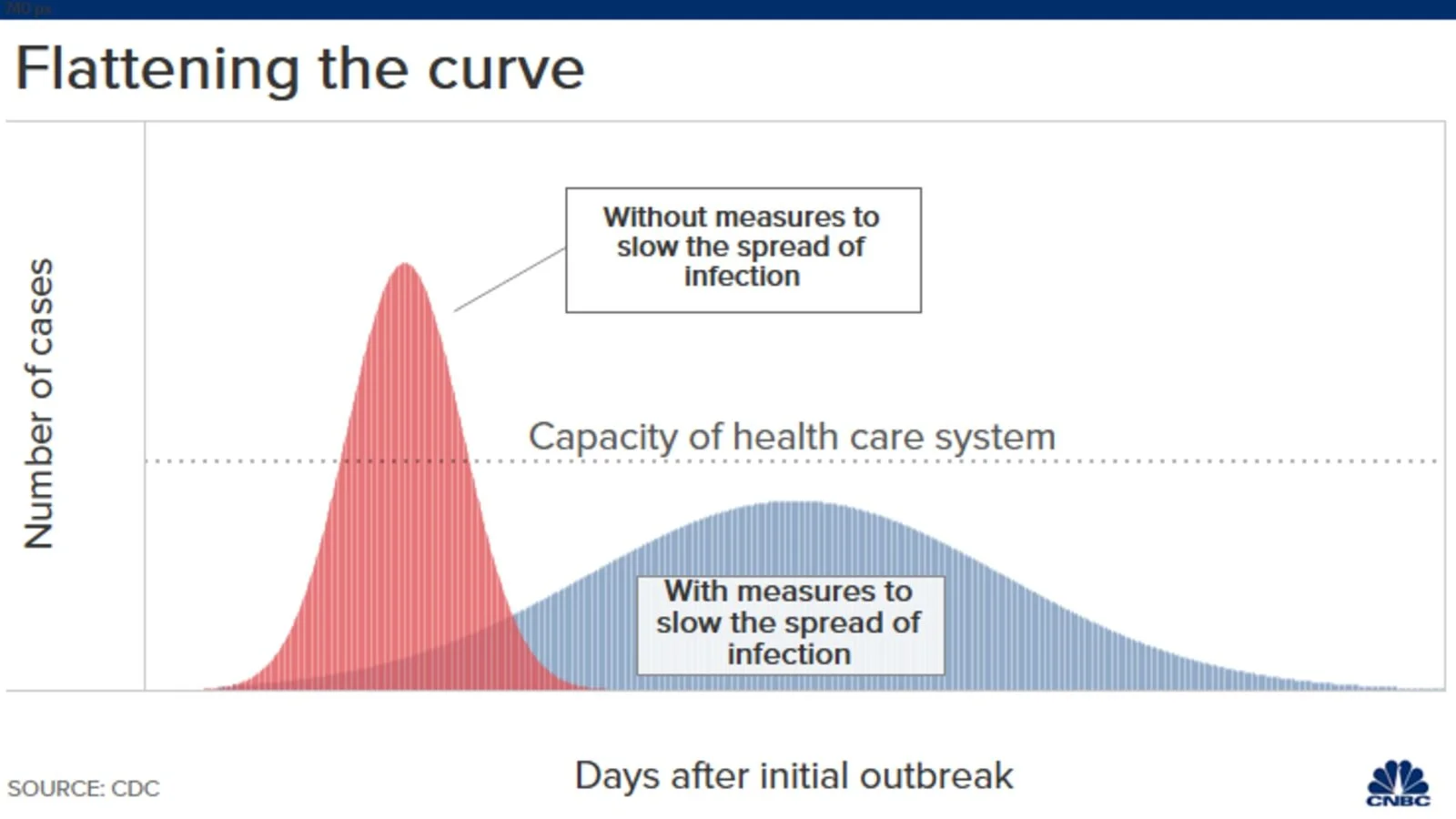
Flattening the curve
What is flattening the curve and why is it so important? What we know so far is that ~20% of people with COVID-19 will require hospitalisation and a further 5% of those will require mechanical ventilation. These numbers are unprecedented and it wouldn’t take many cases to overwhelm our medical system, which is what happened in Italy and has led to use of triaging patients (treating them according to their severity), even in the region of Lombardy which has excellent medical facilities.
Flattening the curve is trying to reduce the spread of the disease so that it becomes more manageable and using aggressive social conditioning and hygiene practices are essential to do so. Physicians worldwide are alarmed and have good reason to be so; without action to flatten the curve hospital systems will become overwhelmed.
Social distancing
Social distancing is trying to slow down the spread of a virus by maintaining a 6 foot distance whenever you are around people. Avoid unnecessarily touching other people (Avoid handshakes, hugs etc) and if possible avoid human contact as much as possible.
It is too late to stop the virus from spreading, but we can slow down its spread as much as possible. If we don’t, more people will die from COVID-19 and more people will die from insufficient care for other health conditions as there aren’t the resources to treat everyone. For a more visual explanation of slowing the curve click here.
Hygiene
As well as practicing social distancing, practicing good hygiene is also a preventative measure. The problem comes with that only 5% of people wash their hands for the recommended 20 seconds, or are using soap sufficient of removing these infection causing germs. Learn the proper hand washing technique and stick to it. Use soap or a hand sanitiser with at least 60% alcohol and avoiding touching your face or mouth.
Self quarantining
If you have had any symptoms, see your doctor and get yourself tested, and self-quarantine for 14 days. Even if you don’t have any symptoms, it is recommended you self-isolate as you decrease your own chances of catching it or spreading it if you are asymptomatic. Every little bit we can do to slow down the spread of COVID-19 decreases the chances that our hospitals get overwhelmed.
A collective effort
We’re in this for the long haul and every one of us needs to help slow the spread. It’s not a time for apathy, ignorance or denialism; it’s here and it’s happening, and every little bit we can do to help create a more positive outcome is valuable. Even if you yourself are not in a high risk group, by practicing good hygiene and social distancing, you are helping reduce the chances that it spreads to someone that could be harmed by it.
Everything we do before a pandemic will seem alarmist. Everything we do after a pandemic will seem inadequate.” - Michael Levitt
We can only hope that in the future our actions appear alarmist, but with the current projections for the virus spread, we may not be doing nearly enough.
Coronavirus Myths
In an effort to try to debunk as much medical misinformation surrounding the virus, I’ve compiled the most common ones. For more resources dedicated to fact checking COVID-19 claims, check the resources at the bottom of the page.
Coronavirus is just another flu
There have been attempts to downplay CoV-2 by saying it is ‘just another flu’, it is NOT just a flu. Cov-2 is many times more infectious than the seasonal flu, as well as having a higher case-mortality rate. As well as that, CoV-2 is a novel virus, meaning it hasn’t been encountered before and we don’t have a built up immunity to it or have standardised treatments for it.
The lowest estimates (around 0.7%) are at least five to seven times higher than the case fatality rates for seasonal influenza (0.1%), and the highest CDC-estimated rate is around 30 times more deadly than the flu. - Dr. Steven Novella
If you have a runny nose and phlegm you have the common cold, not COVID-19
Self diagnosis is unreliable and dangerous, the only way to know for sure if you have it is if you get tested. Symptoms of COVID-19 vary, from “fever, tiredness and dry cough”, to “aches and pains, nasal congestion, runny nose, sore throat or diarrhea.” to being asymptomatic.
We shouldn’t slow down the spread of the virus for ‘herd immunity’
Herd immunity refers to the protective effect that comes from enough people having caught and built up an immunity to a disease that it’s spread slows down. As a novel virus CoV-2 has no herd immunity built up because no one has encountered it before, if we were to let people catch the virus by doing nothing to slow its spread there would be a significant number of deaths.
Drinking water or gargling salt or vinegar will help eliminate the virus
Drinking water does nothing to prevent coronavirus infection. If you breath in an infected person’s respiratory droplets the virus will travel through your airways; drinking water, gargling salt or vinegar does nothing to prevent this.
Spraying alcohol or chlorine over your body can kill the virus
While disinfecting surfaces is a good practice to prevent contaminating surfaces, spraying alcohol or chlorine all over your body will not kill viruses that have already entered your body.
Soap and water is more effective than hand sanitiser
Neither is more effective than the other as both are able to break virus participles apart, they just use different methods. The most important factor is making sure you wash your hands often and thoroughly with either alcohol or soap.
You should be wearing a facial mask
The current recommendations are that for people without respiratory symptoms, wearing a medical mask has no effect (even if COVID-19 is in the area). Over-usage of masks when not needing them can result in those who actually need them being unable to get them.
Supplements can boost my immune system
Not only have there been no supplements shown to help prevent or treat COVID-19, but there is no evidence that any supplements have an effect on bolstering your immune system or help you fight off the flu. The best thing you can do for your immune system is to stay hydrated, eat a healthy diet, exercise and get enough sleep.
It’s a man made virus
Conspiracy theories have been spread, and a popular one is that the virus is man-made. This is not true. Not only do we lack the technology to even achieve such a feat of bio-engineering, but a recent study conclusively showed that it was a naturally born virus through genome analysis.
SARS-CoV-2 is the seventh coronavirus known to infect humans; SARS-CoV, MERS-CoV and SARS-CoV-2 can cause severe disease, whereas HKU1, NL63, OC43 and 229E are associated with mild symptoms 6… Our analyses clearly show that SARS-CoV-2 is not a laboratory construct or a purposefully manipulated virus.
You have to be showing symptoms to be infectious
While the true percentage of people who have COVID-19 and are asymptomatic (show no symptoms) is currently unknown, estimates currently place it to be about 50% of cases. However, even if you are asymptomatic, you can still be infectious, and may unknowingly infect those around you if you do not practice social distancing and good hygiene.
Only elderly people have to be worried
Less risk does not equal no risk. The data is currently showing that 80% of mortalities occur in people over 65 years, however cases of complications can arise from the disease even in apparently healthy populations. Even if you aren’t in a high-risk group you need to practice good hygiene and social distancing; you are a potential vector (transmission point) from which the disease can spread, and by not taking the proper precautions you may make someone who is in a high-risk group in danger. Visiting elderly or immunocompromised people is highly inadvisable.
"I have a message for young people: You are not invincible, this virus could put you in hospital for weeks or even kill you. Even if you don't get sick the choices you make about where you go could be the difference between life and death for someone else." - Tedros Adhanom
Take home points
If you can’t be part of the solution, at least don’t be part of the problem
The situation is serious and will continue to get worse if we don’t collectively take the right actions
You can’t boost your immune system with supplements, and there is no evidence that supplements will help people with COVID-19
Keep hydrated, maintain a healthy diet, exercise and get enough sleep - These will do more to keep your immune system at its best than any unproven supplement or treatment will
Always get your information from multiple credible sources