Imposter Syndrome: The insecurity of experts
What is Imposter Syndrome?
Imposter syndrome, also known as imposter phenomenon, fraud syndrome and impostorism, is a relatively unknown but pervasive issue among people who are doing well in their field but feel like they’re living a lie. It’s the nagging feeling that despite doing well professionally, you only got there from a combination of good timing, help from other people and it’s all just a facade of competency.
Imposter syndrome is a psychological pattern in which one doubts one's accomplishments and has a persistent internalized fear of being exposed as a "fraud"
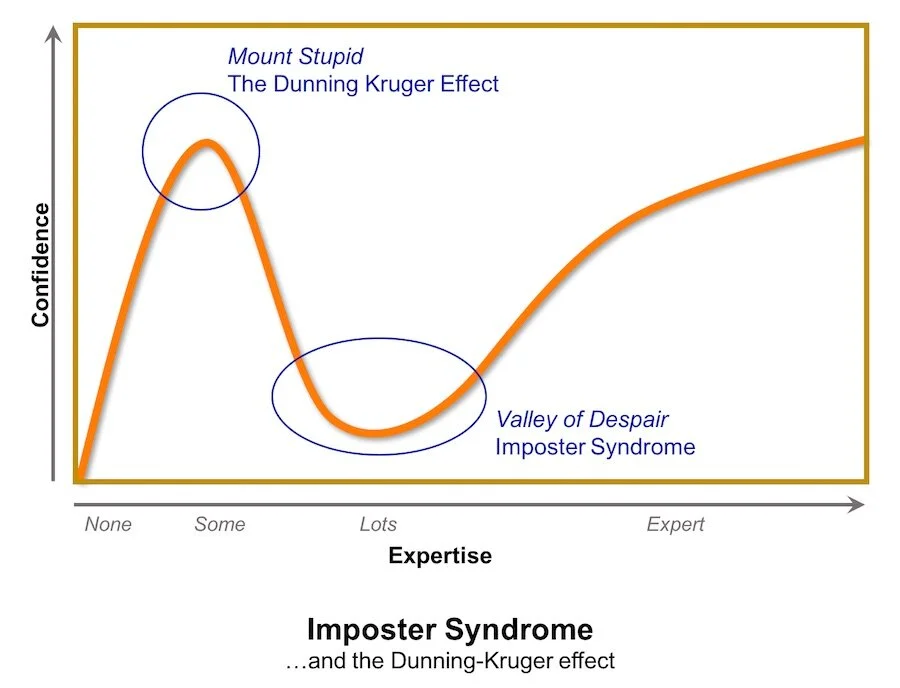
Feeling less intelligent and competent than others think you are is a common symptom of imposter syndrome, with people who have imposter syndrome consistenty having feelings of self-doubt or insecurity, despite their success. These high achievers have difficulty internalising a sense of accomplishment, expertise or skill. The opposite to the imposter syndrome is the Dunning-Kruger effect, where novices tend to greatly exaggerate their own expertise mainly because they know so little about the topic, which as Dunning himself states, “incompetent people cannot recognise just how incompetent they are”.
Imposter syndrome is especially common in women, especially women in male-dominated fields like academia, with a UK survey showing that 85% of women felt symptoms of imposter syndrome, but only 25% knew what it was. This isn’t just an issue of insecure scientists, as anyone in any position can have these feelings of inadequacy. This can be a serious issue which can stall professional progress; after all, why should they accept that promotion to a higher role if they don’t believe they have the skills to do so?
What causes imposter syndrome?
An issue is that the symptoms of imposter syndrome aren’t necessarily a bad thing, anyone who has begun their journey into a new field will know the feeling of getting overwhelmed at times at the realisation of how little you really know about the topic. The issue comes when becoming more competent and success starts to come, but the feelings don’t go away.
Imposter syndrome is more commonly found in people with a perfectionistic personality. We’re often our own worst critics, setting impossibly high bars for ourselves and when we fail to meet them we are harsh on ourself. If you would find the bar you set for yourself ridiculous for someone else, that’s a pretty good sign you’re pushing yourself too hard.
Dealing with imposter syndrome
Part of the reason it is so common in the academic field is that experts are so often delving into the unknown with their research, they realise how large their knowledge gaps are. It should be comforting that even among people who are the best of the best, people who already know more than 99% of the population in their field still doubt themself. You can’t know everything and trying to will eventually lead to psychological burnout if you don’t keep up your learning in a healthy way.
“If you’ve actually accomplished something, then own it. There’s no need to think that you didn’t really earn it.” - Lou Manza
Dealing with it can be difficult, especially as its main cause is insecurity and feelings of inadequacy; however, by celebrating your achievements and taking time to take a step back and really look at how far you’ve come can help buffer these feelings. Knowing your true strengths (and weaknesses) can be your guide for areas you need to work on, and areas where you can thrive. People with imposter syndrome often fear making mistakes, which can cause them to limit themself as owning your mistakes, without dwelling on them or looking for excuses or blame, can actually increase your esteem and respect, not the opposite. ‘The only bad mistake is the one you didn’t learn from’ as the saying goes.
Take home points
Feeling inadequate at your job temporarily may not be a bad thing if you legitimately are out of your depth and have realised how much more you have to learn, that is a normal and healthy reaction. It’s if that feeling doesn’t begin to go away, even as you learn more and more about your field that it becomes an issue.
Be ambitious with your goals, but be realistic
Know your strengths and weaknesses and build on them
Reminding yourself of your achievements periodically can help buffer its effects
Refusing to own your mistakes will only make you feel worse about them
Talk to a mental health professional if these feelings aren’t getting better